

Labs & Infrastructure
List of labs under Electrical Engineering Department-
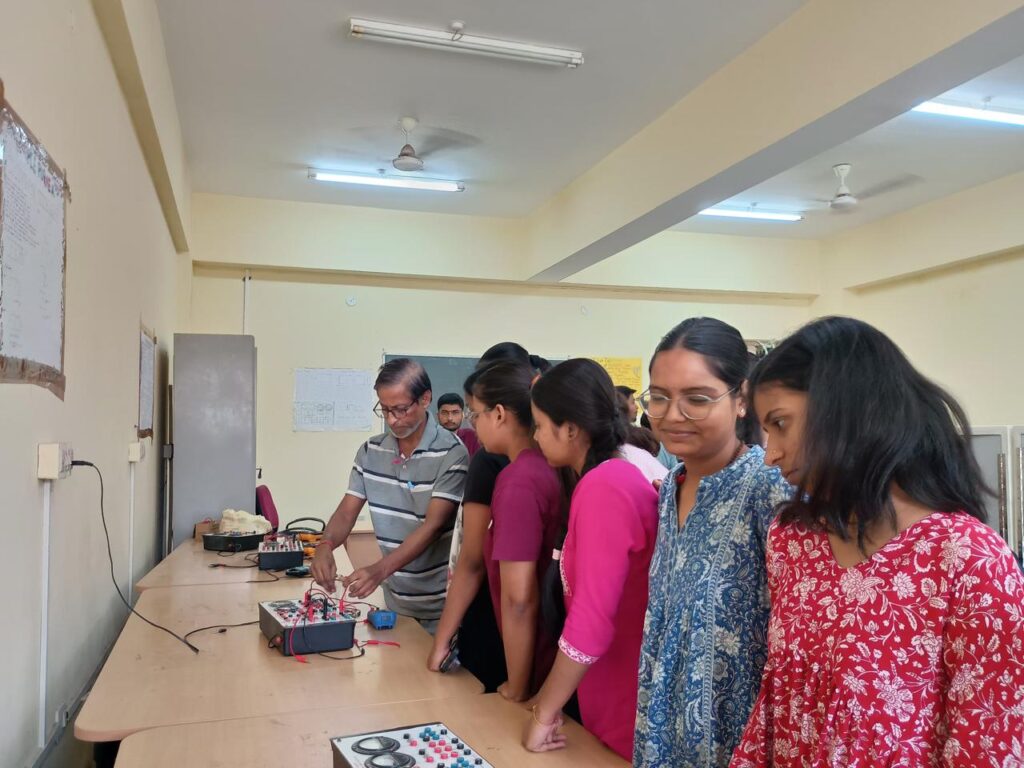
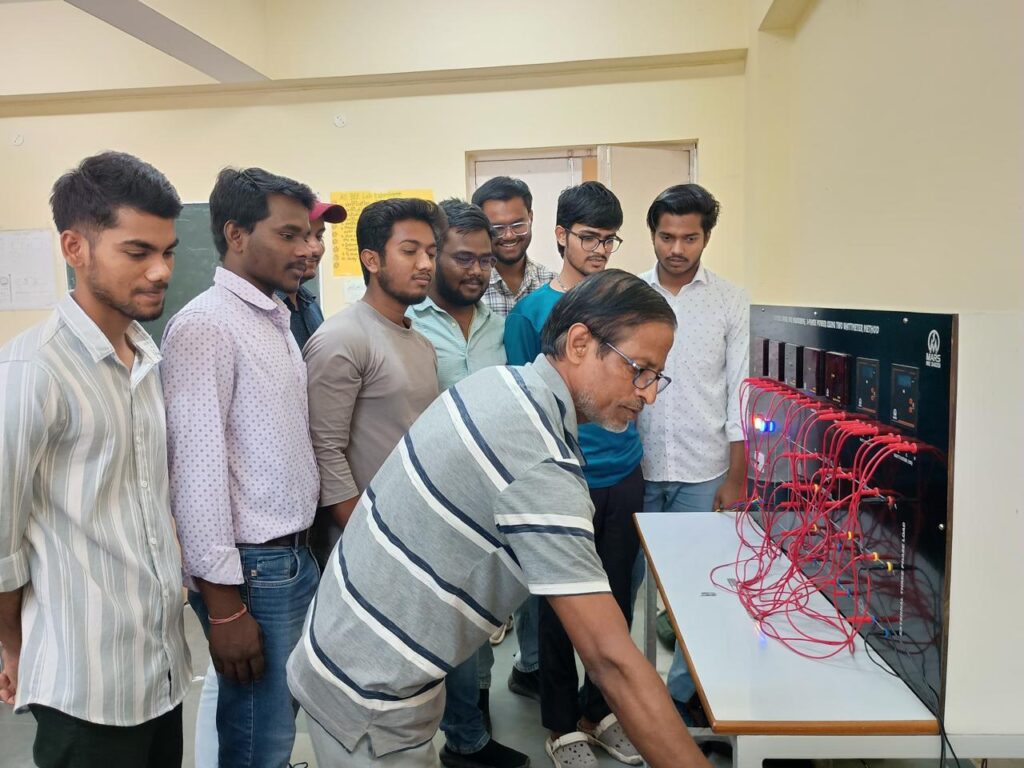
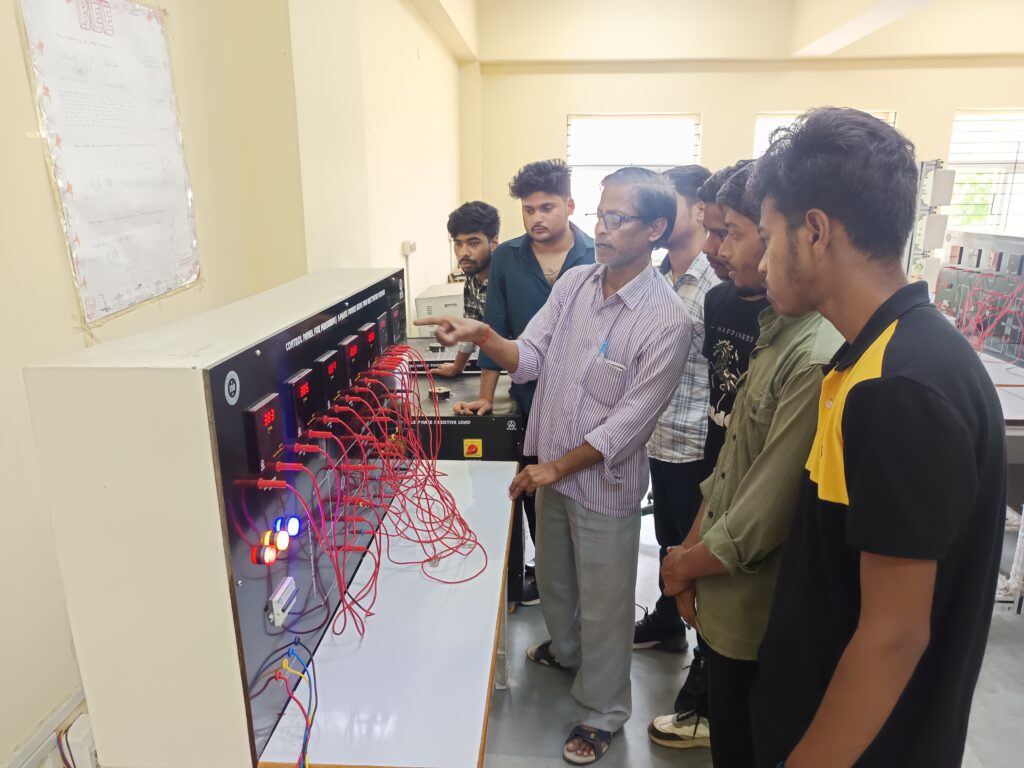
This lab introduces fundamental electrical concepts like Ohm’s law, Kirchhoff’s laws, and basic circuit analysis. Students perform experiments on resistive, inductive, and capacitive circuits. It builds hands-on familiarity with measuring instruments such as voltmeters, ammeters, and multimeters. Practical understanding of series-parallel networks is developed. Safety practices and basic wiring skills are emphasized.
2. Electrical Machines Lab – I (DC Machines)
Focuses on construction, operation, and characteristics of DC machines. Experiments include speed control, load testing, and efficiency calculation of DC motors and generators. Students observe magnetization and load characteristics. Practical exposure to starting and braking methods is provided. This lab builds a foundation for electromechanical energy conversion.
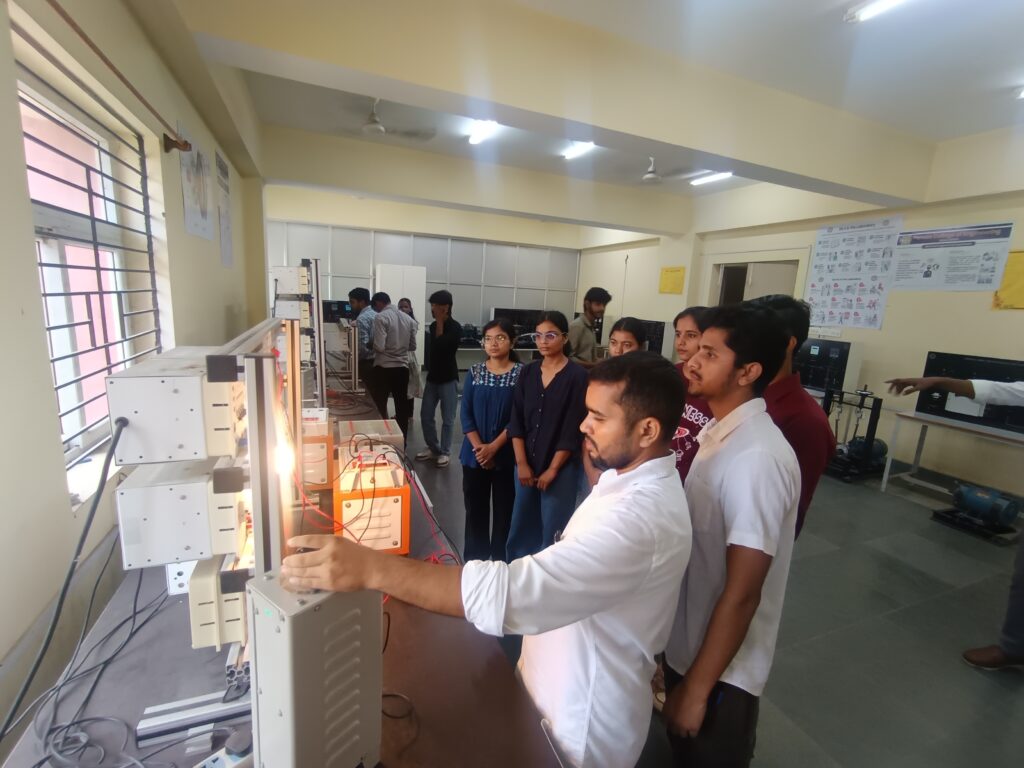
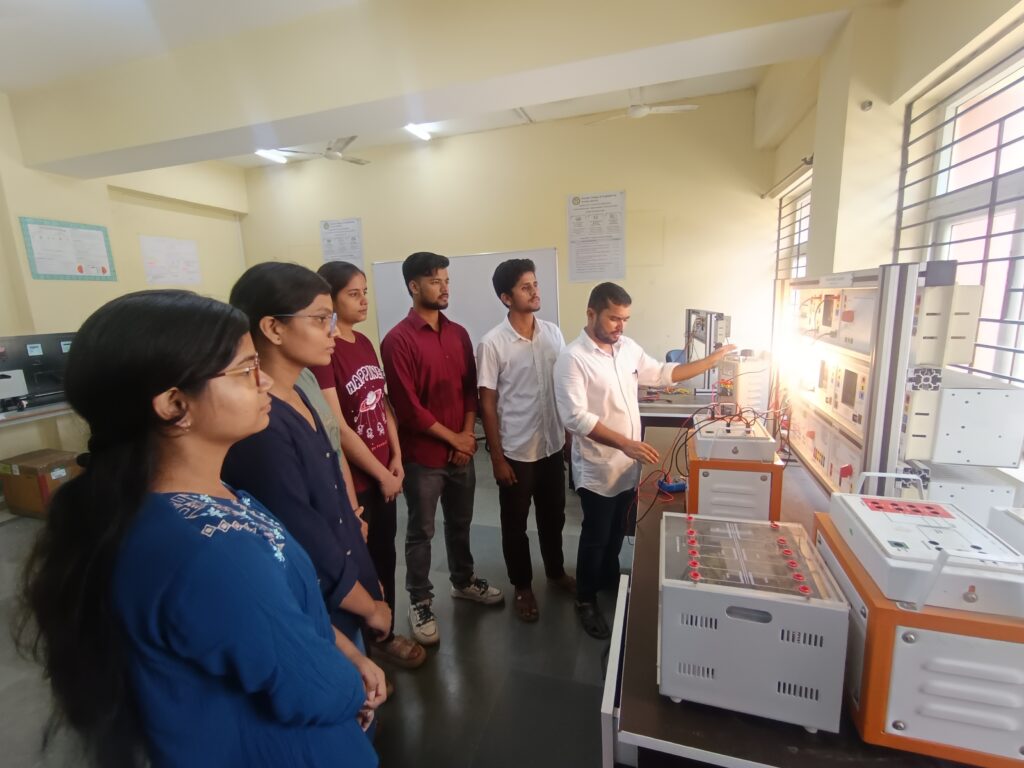
3. Electrical Machines Lab – II (AC Machines)
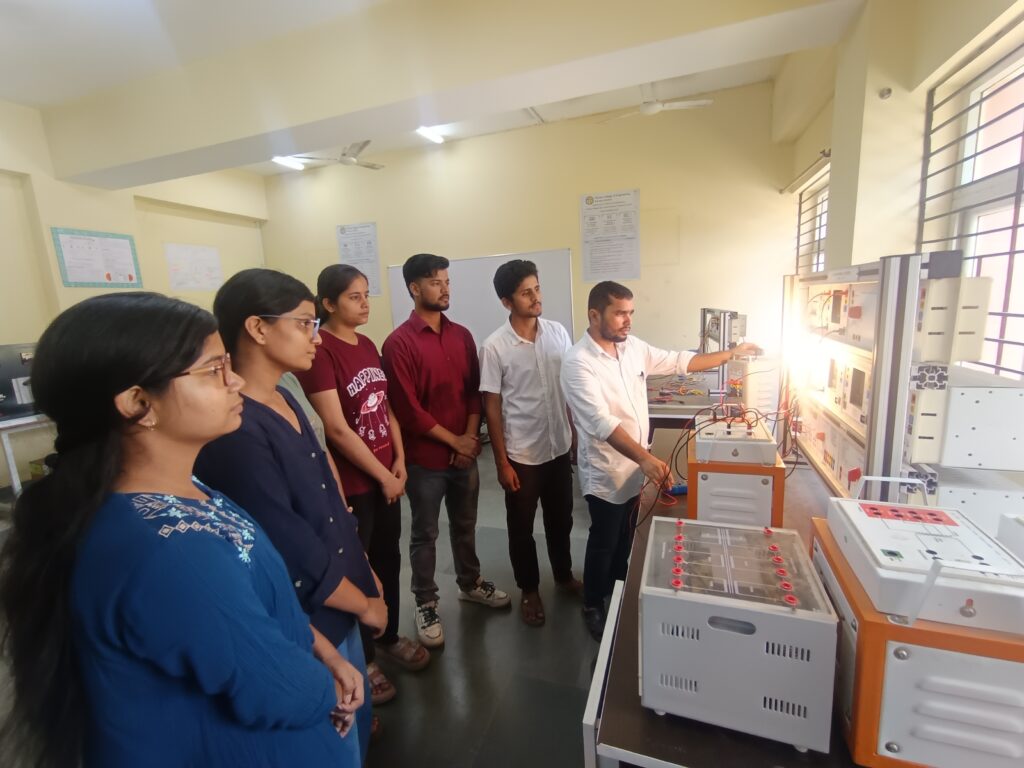
Covers transformers, induction motors, and synchronous machines. Students perform tests like open-circuit, short-circuit, and load tests. The lab demonstrates torque-speed characteristics and performance analysis. Synchronization and parallel operation concepts are explored. It strengthens understanding of real-world power equipment.
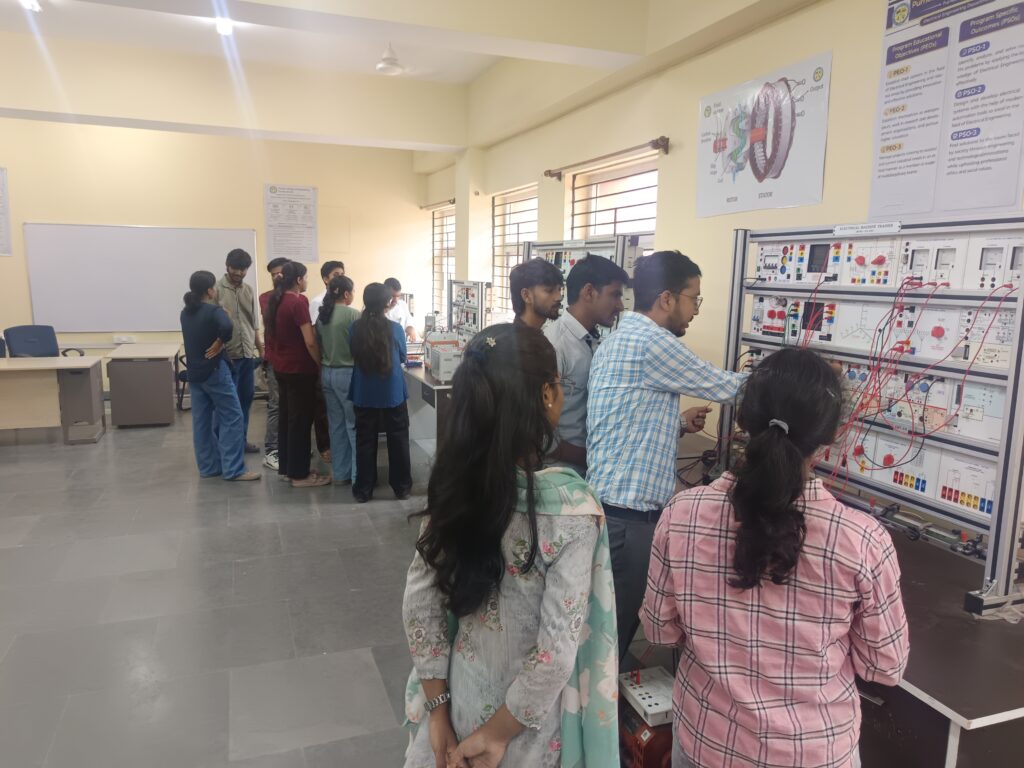
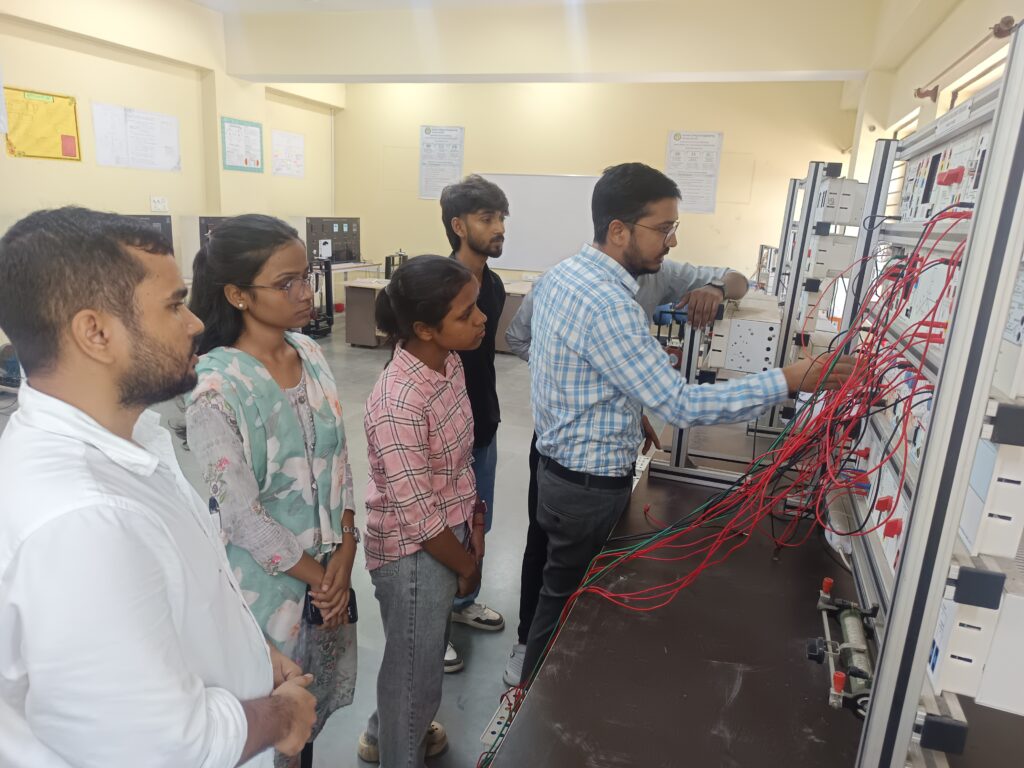
4. Power Systems Lab
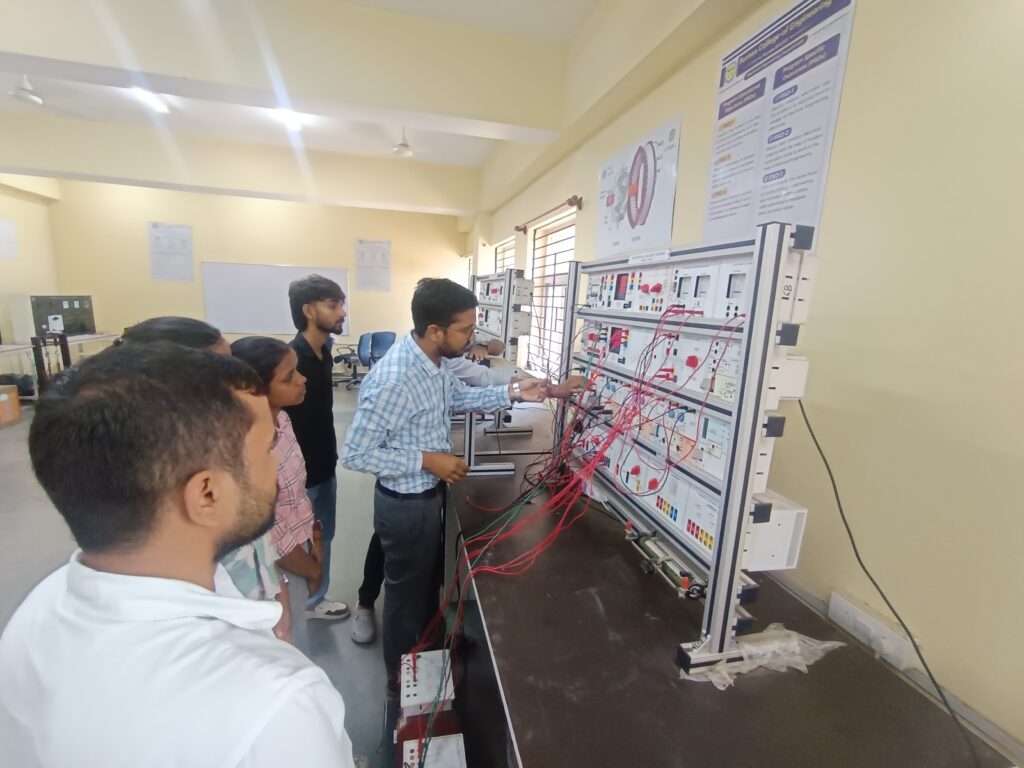
Introduces generation, transmission, and distribution concepts through simulations and experiments. Students study transmission line parameters, faults, and protection schemes. Load flow and stability basics are demonstrated. Relay coordination and circuit breaker operation are analyzed. The lab links theory with practical power system behavior.
5. Control Systems Lab
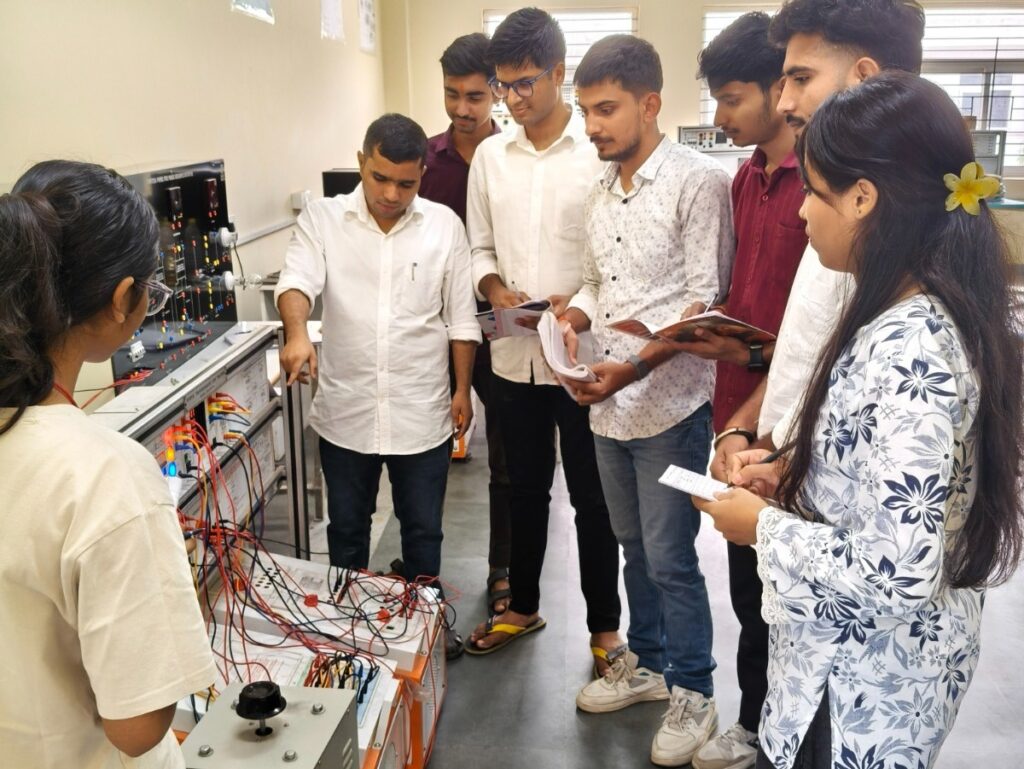
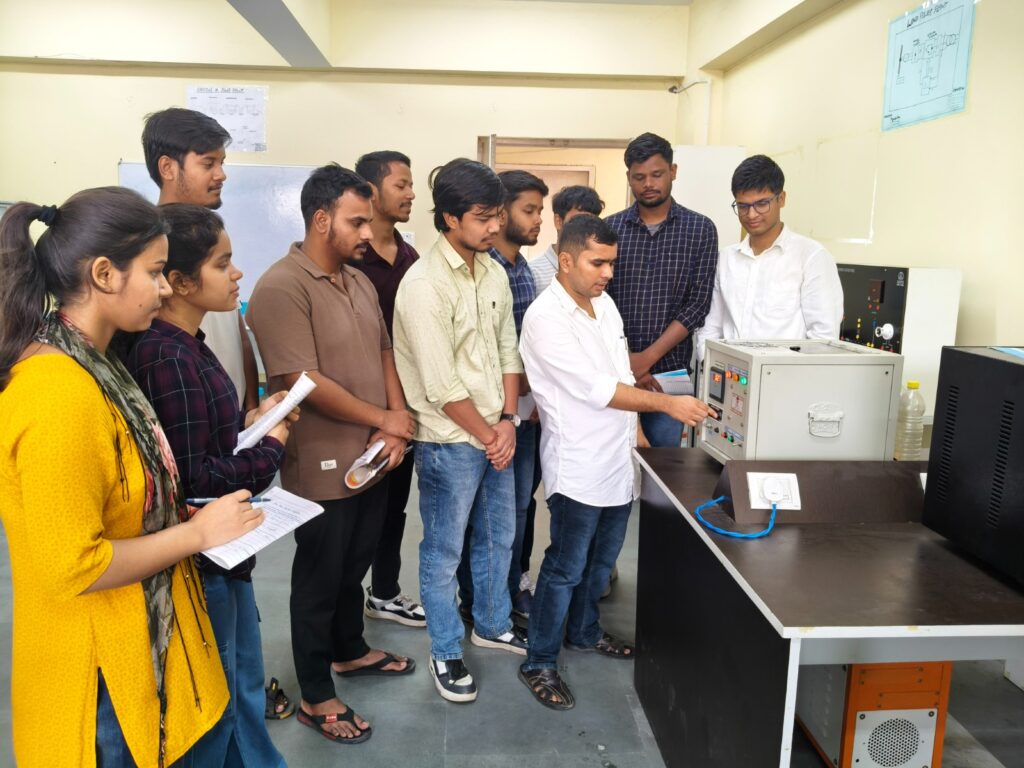
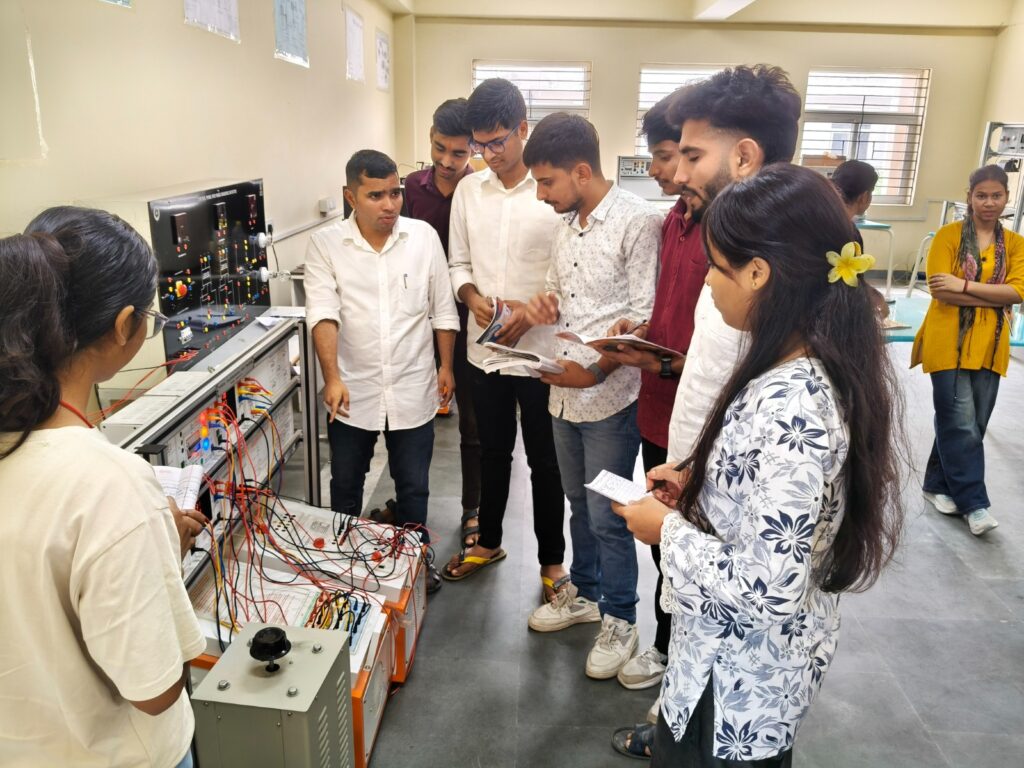
Focuses on system modeling, stability, and response analysis. Experiments include time response, frequency response, and root locus techniques. Students analyze first and higher-order systems. Controllers like PID are implemented and tuned. The lab emphasizes dynamic system behavior and feedback control.
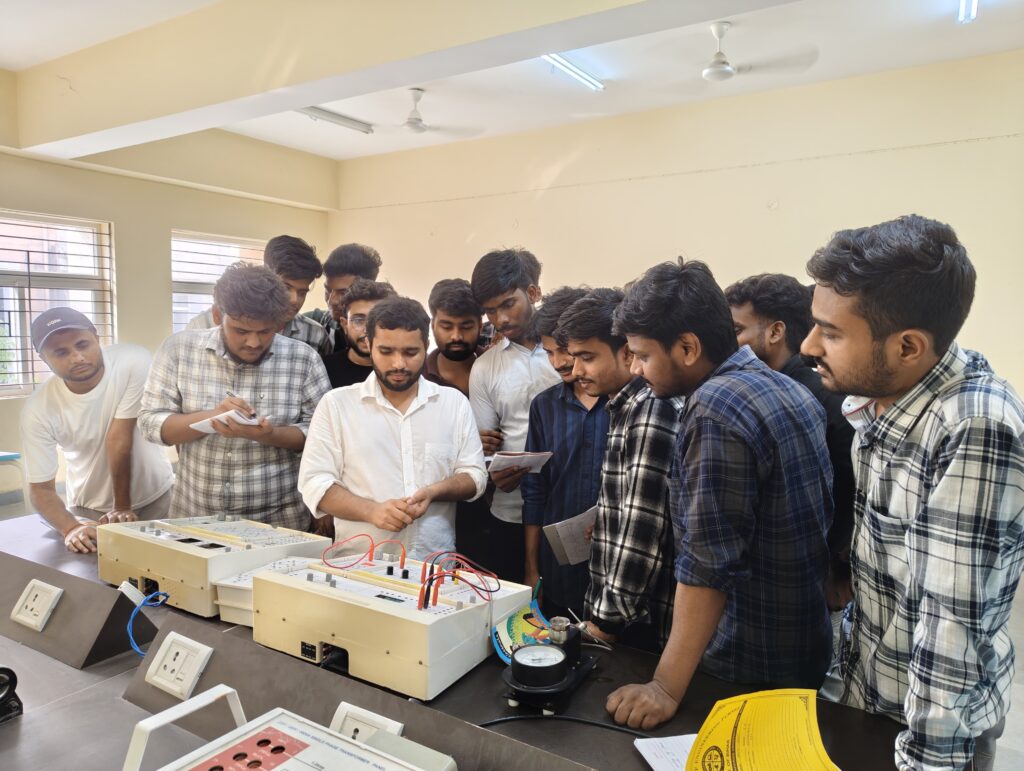
6. Electrical Measurements & Instrumentation Lab
Deals with measurement techniques for voltage, current, power, and energy. Students use instruments like wattmeters, energy meters, and bridges. Calibration and error analysis are performed. The lab introduces transducers and data acquisition basics. Emphasis is on accuracy and precision in measurements.
7. Power Electronics Lab
Covers semiconductor devices such as SCRs, MOSFETs, and IGBTs. Students perform experiments on rectifiers, choppers, and inverters. Waveform analysis and firing angle control are studied. Applications in motor control and power conversion are demonstrated. The lab connects electronics with power applications.
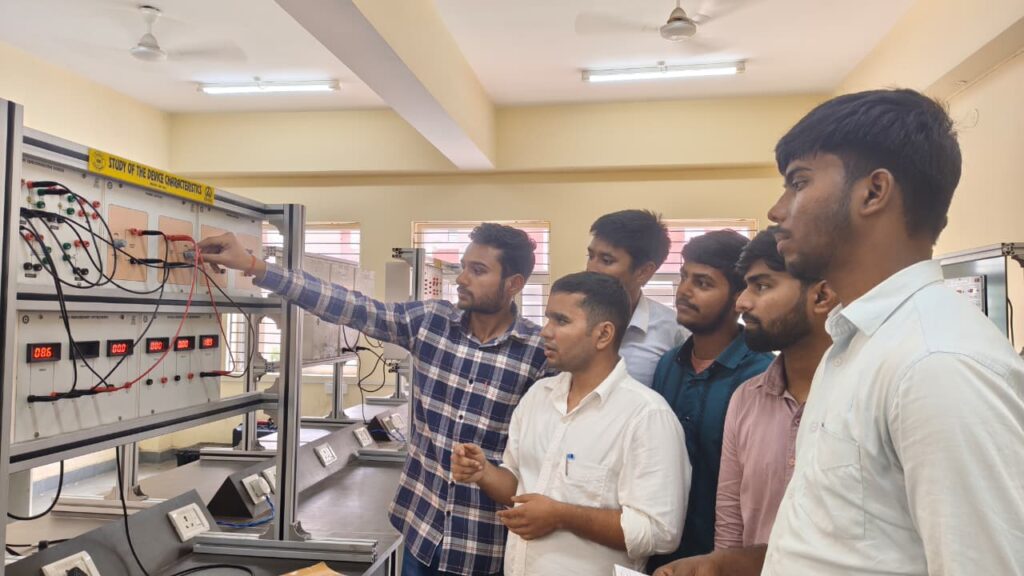
8. Electrical Circuit Analysis Lab
Focuses on verification of circuit laws and network theorems like Thevenin’s, Norton’s, and Superposition. Students analyze RLC circuits under steady-state and transient conditions.
Enhances analytical and problem-solving skills through theory–practical comparison.
9. Digital Electronics Lab
Introduces logic gates, combinational and sequential circuits. Students design and verify circuits like adders, flip-flops, counters, and registers. Builds a foundation for digital system design and embedded applications.
10. MATLAB Lab
This lab focuses on computational analysis and simulation using MATLAB. Students model electrical systems, solve equations, and plot responses. Control systems, signal processing, and power system simulations are performed. It helps visualize theoretical concepts effectively. Programming skills for engineering problem-solving are developed.

11. Proteus Simulation Lab
This lab uses Proteus Design Suite for circuit design and simulation. Students create virtual circuits and analyze their behavior before hardware implementation. It supports schematic design and PCB layout basics. Fault analysis and debugging can be done safely. It enhances design skills and reduces dependency on physical components.
12. Electronics Design Lab
Focuses on designing and implementing electronic circuits for practical applications. Students work on amplifiers, filters, and embedded systems. Simulation and hardware implementation are both emphasized. Design methodology and troubleshooting skills are developed. It bridges theory with real-world electronic system design.